TEXTILE TRANSFORMATION NOVA SCOTIA
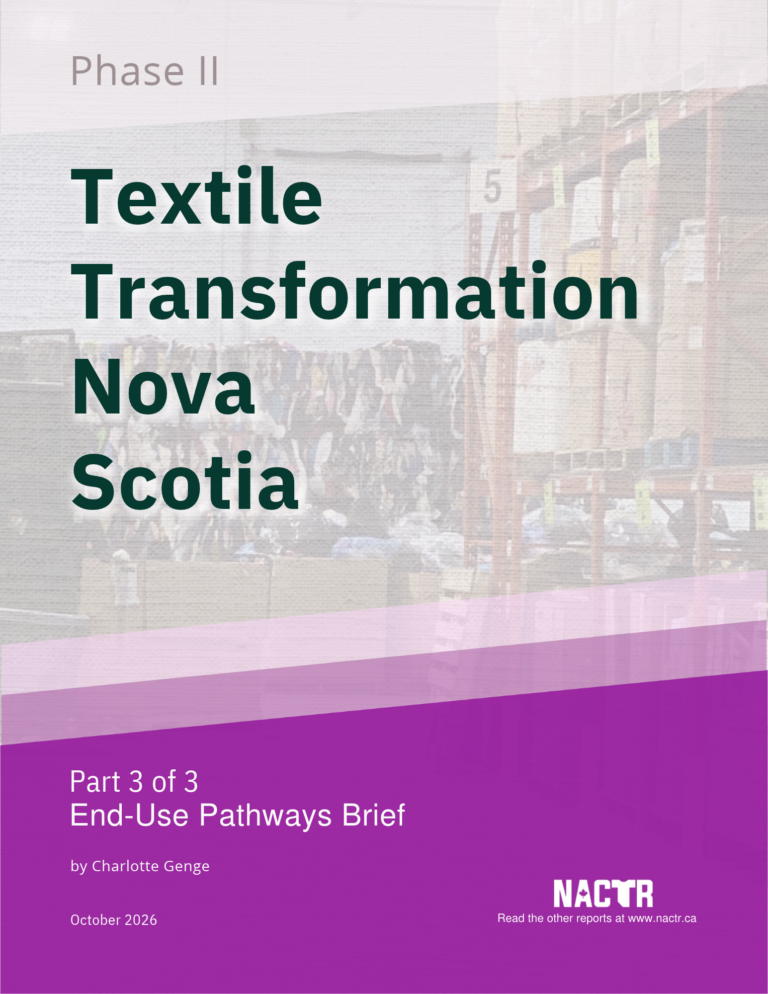
Volumes of textiles being sent to landfill in Nova Scotia have been increasing in recent years. Three new studies seek to understand what is donated, why it is not always resold, and where it can go next.
Published October 2026
Charitable thrift stores are the backbone of Nova Scotia’s textile reuse system, but they were not built to absorb everything that arrives at the donation door. TTNS Phase II is the province’s first integrated evidence base on what enters the system, how donor behaviour shapes it, and where investment could turn pressure into opportunity. This work serves as a blueprint for other Canadian jurisdictions.
Textiles landfilled in Nova Scotia in 2023
donates items assessed
Canadians surveyed
donated items cannot be resold
One document that frames all three reports: the overall executive summary, introduction, recommendations, consolidated reference list, and appendices.
What is actually in Nova Scotia’s donation stream, and how does this contribute to resaleability and recyclability?
Appendix A and references in the Master Document
How Canadians think about donating, what actually arrives at the donation centre, and how to close the gap.
Appendix B and references in the Master Document
Where unsellable textiles can go next, from a provincial reuse and sorting hub to materials for the built environment.
Appendix C and references in the Master Document
25 companies made up 1/3 of the items assessed
The top 25 parent brands accounted for 34.1% of items, while owning only 5.9% of identified brands.
1 in 3 donated items cannot be resold
33.6% of 4,664 assessed items were not resaleable, even though 9 in 10 people say that donating only clean, wearable items matters.
The most urgent end pathway is a sorting hub
A shared aggregation, reuse, and sorting hub would create consistent, baled feedstock every downstream pathway depends on.
22 Recommendations across 3 areas
Material, behaviour, and market actions, sequenced from low-cost measures now to infrastucture and policy later.
Material (MAT): fibre content, producer accountability
Behaviour (BEH): donor messaging, education, data
Market (MKT): sorting hub, denim pathway, procurement